
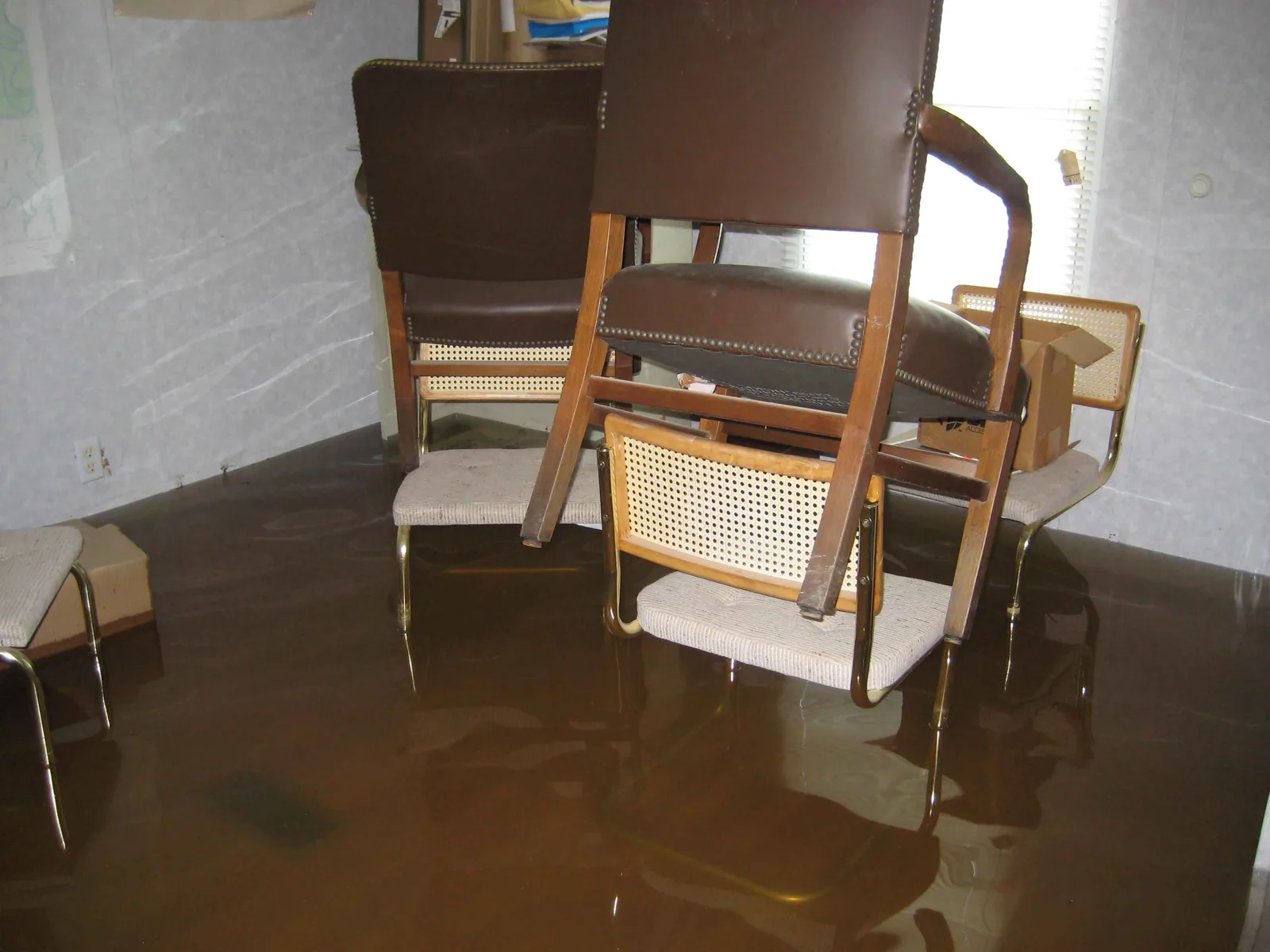
Read this first: when NOT to DIY
Do not try to clean this up yourself:
- Sewage or dirty water. Water from toilets, sewer lines, or floor drains can carry bacteria and disease. This is never a DIY job.
- Water near electricity. If water reached outlets, your breaker panel, or appliances — stop. Do not touch a wet panel. Call your utility company or an electrician.
- Large-scale flooding. Multiple rooms, inches of standing water, water inside walls — that needs commercial equipment and moisture meters.
- Water that sat for days. Mold may already be growing where you cannot see it.
When in doubt, call. (301) 679-9193 — we will tell you honestly if it is a DIY job.
When DIY is OK
A small amount of clean water — a supply-line leak you caught fast, an overflowing sink, a water heater drip pan — in one room, with no electrical danger. Clean water means water from a pipe or appliance, not from a drain, a toilet, or the ground outside.
What you need
Wet/dry vacuum. Most hardware stores sell them, and it is a useful thing to own.
Dehumidifier. The single most important rental. Home Depot rents commercial dehumidifiers built for this exact job — for example the Dri-Eaz PRO compact dehumidifier rental and the 18-gallon-per-day dehumidifier rental. Their drying and restoration equipment rental section also lists carpet blowers and related gear.
Air movers (carpet blowers). Your box fans help, but they move far less air than a carpet blower aimed low across a wet floor. Same rental departments — see the Home Depot drying and restoration rental section linked above.
Wet/dry vacuum. These are inexpensive enough that most people buy rather than rent — both Home Depot and Lowe's sell them, and it is a useful thing to own.
Lowe's tool rental. Lowe's rents tools through its tool rental program — drying equipment varies by store, so check with your local Lowe's before driving over.
Rental prices change by store and over time, so check the links above for current pricing instead of trusting any number printed here.
Moisture meter. Cheap pin-type meters are sold at hardware stores. Wood should read dry before you call the job done — guessing by touch is how walls get closed up wet.
Basic gear: rubber boots, gloves, trash bags, a mop and bucket, and plastic sheeting to protect dry areas.
Step by step
1. Make it safe. Shut off the water source. If water is anywhere near outlets or appliances, cut power to the room at the breaker — from a dry spot. Never step into standing water near electricity.
2. Document first. Photograph and video everything before you move a thing. If you file an insurance claim later, this is your evidence. (See our insurance guide for what to say — and not say — to your insurer.)
3. Get the water out. Wet/dry vac, mops, towels. Every gallon you remove now is a gallon that will not soak into floors and walls.
4. Pull what cannot be saved. Carpet padding almost never survives — pull it and toss it. Wet cardboard, soaked insulation, and swollen particle board go too. If drywall wicked water upward, cut it at least a foot above the waterline so the wall cavity can dry.
5. Dry for 48–72 hours. Air movers blowing across wet surfaces plus a dehumidifier pulling moisture from the air, running nonstop. Close the room off so the dehumidifier works on that space, not the whole house. Keep it warm — heat helps evaporation.
6. Check with a moisture meter. Surfaces can feel dry while the inside is still wet. Do not rebuild or lay flooring until readings are actually dry.
7. Watch for mold. A musty smell, dark spots on baseboards, or areas that still feel damp after days of drying mean moisture is still trapped. Mold can start within 24–48 hours on wet materials.
What real homeowners learned the hard way
From a homeowner forum thread about a flooded basement: after four inches of standing water, the crew ripped out carpet and pad, cut one to two feet of drywall off the bottom of most walls so the studs could dry, then ran industrial fans and dehumidifiers for days — checking back with moisture sensors several times. Plastic bins and solid wood furniture mostly survived; paper, cardboard, and particle board did not. The lesson shared: it is cheaper to cut out wet drywall now than to remediate mold a year later. (homeowner discussion)
From another thread on drying a flooded basement: run fans for days with plenty of fresh air, pull up carpet corners to check underneath (the pad hides moisture and mold long after the surface feels dry), and know that dehumidifier water is not clean — dump it, do not reuse it. (homeowner discussion)
Fast cleanup helps your insurance claim
Most homeowners policies require you to stop further damage — that is called your duty to mitigate. Drying fast is not just good for your house; it protects your claim. Photograph first, then dry. Our insurance guide walks through what to say (and not say) when you call your insurer.
The honest close
DIY works for small, clean-water jobs you catch fast. If the job grows — the smell will not quit, the meter will not drop, or you find water where you did not expect it — stop and call a pro. A small job handled late becomes a big job.
Call (301) 679-9193 — if it is truly a DIY job, we will tell you so.